The Least We Can Do

Memorial Day – at least, the formal celebration – is coming a little late to one state this year.
Tennessee commemorated the spirit, if not the official day, of the occasion more than two months before the rest of us, when most of 200 people gathered at a cemetery in Nashville to lay Lonnie Wayman to rest.
Virtually none of them knew him.
Wayman, 73, a U.S. Navy veteran, passed away with no known family members to claim his body, or honor his passing. It happens, the military says. More often than you’d think.
The Tennessee Department of Veterans Services posted an online notice, inviting the public to attend Mr. Wayman’s service. To their astonishment, enough people did to crowd the cemetery chapel and overflow out onto the surrounding patio area. Men and women of all ages, children and teens. Some wore coats and ties; others looked like they’d swung by coming home from the grocery. But all stood quiet and respectful. Not a few blinked back tears as “Taps” was played.
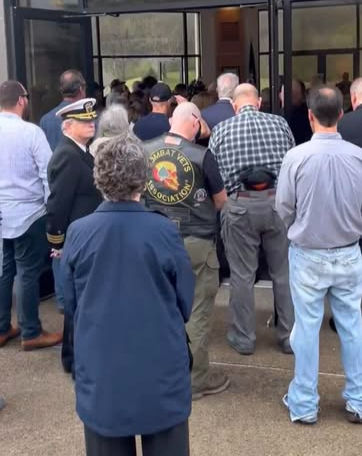
Watching video of the service, I began to wonder why so many – indeed, any – of these, came.
It’s a funny thing about funerals: we gather to honor people who will never know we honored them. We like to think they’re up there, watching, but, in truth, the newly discovered delights of heaven (or engulfing horrors of hell) must surely obscure any interest the departed may have in what’s being said about them, however gracious, back here.
At most such services, we might say we do this for ourselves, out of a very human desire to clarify, solidify, magnify what this life meant to us. How this one touched us, encouraged us, perhaps even profoundly shaped us with their words and actions, somewhere along the way.

Only, even a day or two before this service, 99 percent of these people had no idea Lonnie Wayman existed. His life in no discernible way impacted their lives at all.
Well, then, we say, we come “to honor their service.” But, then, in the case of someone like Mr. Wayman, what do we really know about that service? Military officials seemed unable to provide so much as his rank, or even a photo of him. Was he drafted, or did he volunteer? Was he conspicuous for his courage and inspiring in his discipline, or a malingerer who barely finished his undistinguished tour of duty?

Lacking any facts of his service, then, we’re left with … well, the fact of his service. All that we honor is all that we know: Lonnie Wayman invested some portion of his life in the U.S. Navy. For whatever reason, he joined the ranks of those we pay to protect our lives and loved ones, and to preserve the enduring values of our country.
The more generous among us give him the benefit of the doubt, presuming he did this willingly, ably, and in at least some measure, unselfishly.

For, though we don’t like to talk about it, military service has this in common with a jail sentence: a person is giving up, for a given period of time, their right to determine their own direction for their lives. Like inmates, soldiers surrender their freedom – albeit it, in most cases, more willingly – to ensure in some way the safety of the rest of us.
But while criminals, by their actions, pour contempt on the ideals so many of us live by … soldiers honor those ideals by their tangible willingness to do what most of us won’t: sacrifice ourselves for people we don’t know.

If a man is willing to die for me – whatever his character, his history, his reasons – the least I can do is stand at his graveside, and pray for his soul.
Or, perhaps, one Monday a year, pause at the barbecue … the ballgame … the swim party long enough to offer my thanks for him. And so many, many as unknown and unremembered as he is.
One thing most of us won’t do this weekend – even those of us sitting in church – is lift up a song that those who came before us used to sing with joy, vigor, and regularity, not only on Memorial Day, but throughout the year. It’s a song even those it was written for seem ashamed to sing, nowadays, when we’ve determined that anything that smacks of fighting disgraces the idea of godly love. And that any hymn to sacrifice threatens our penchant for carefree Christianity.
But in the lyrics may lie another clue, perhaps, as to why so many strangers gathered, one chilly day last March, to honor Sailor Lonnie Wayman. Perhaps – let us pray – some of us still know, in our bones, what we hesitate to proclaim with our voices:
Like a mighty army
Moves the Church of God:
Brothers, we are treading
Where the saints have trod;
We are not divided,
All one Body we—
One in faith and Spirit,
One eternally.
Onward Christian soldiers,
Marching as to war
With the cross of Jesus
Going on before.




Comments